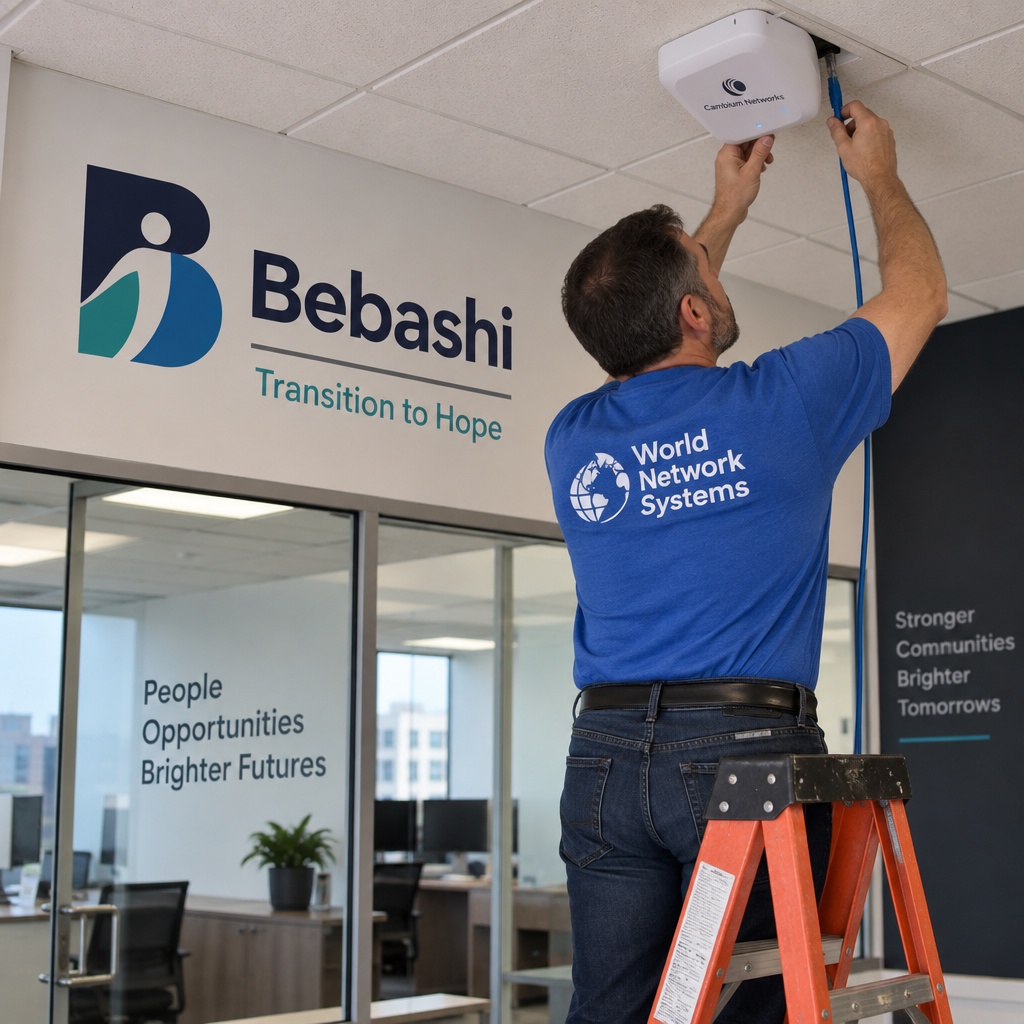
Bebashi's new office at 4101 Woodland Avenue had no existing network infrastructure. That meant the technology couldn't be treated as an afterthought.
WNS needed to determine where connections would be required, how wireless access points would be positioned, where network equipment would live, how the floors would connect, and what infrastructure would give Bebashi room to grow.
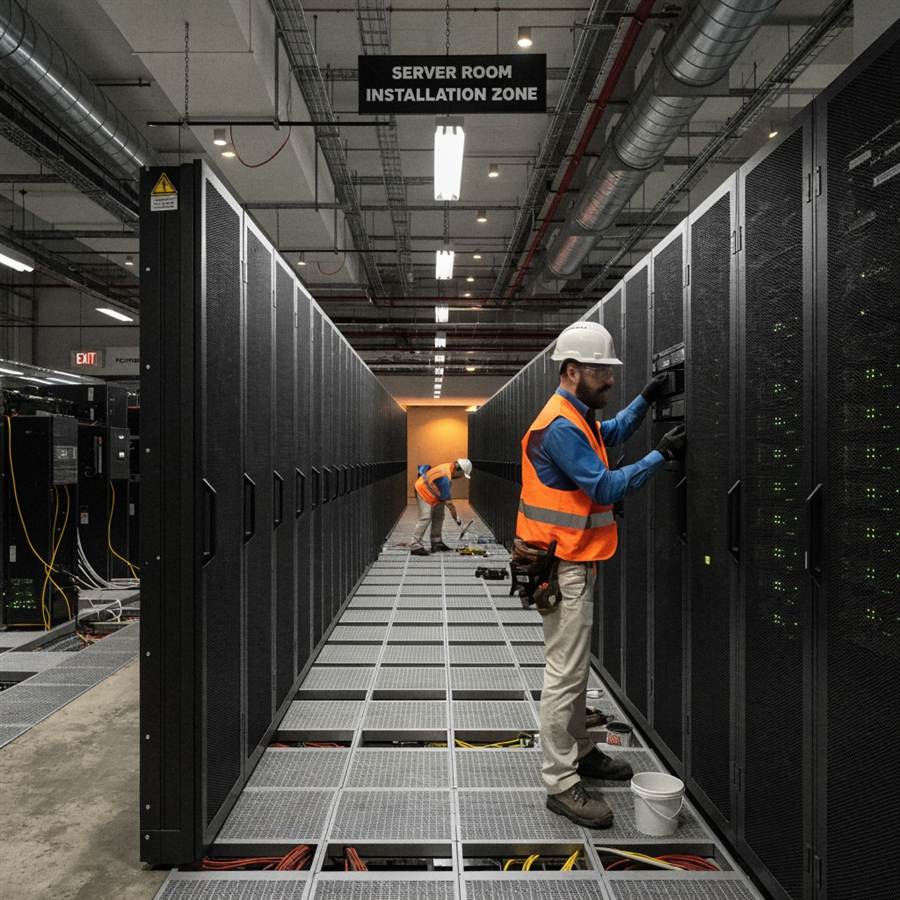
The project included connectivity for:
Instead of treating cabling, Wi-Fi, and networking as separate projects, WNS designed them as parts of the same system.
Running cable is only one part of building a reliable office network. WNS planned and installed the physical and network infrastructure together so that everything behind the walls, inside the racks, and across the wireless network worked as one environment.
WNS installed 126 network runs serving desks, phones, and connected devices, plus 15 dedicated runs for wireless access points. Each connection was installed using solid-copper, plenum-rated CAT6 cable and terminated, tested, and labeled before employees moved into the building.
Bebashi's main IT closet is located on the first floor, with a secondary closet serving the third floor. WNS installed a dedicated singlemode fiber backbone between the two closets, including fiber patch panels and 10-gigabit uplinks — one centrally managed network spanning both floors rather than two isolated installations.
Fifteen Wi-Fi access points were incorporated into the cabling and network design rather than added after construction was complete. Dedicated network drops provide connectivity and PoE power to each access point, making the wireless network easier to manage and maintain.
WNS built both IT closets with the equipment needed to support the environment:
Both closets were built with additional capacity so Bebashi could expand without immediately rebuilding its infrastructure.
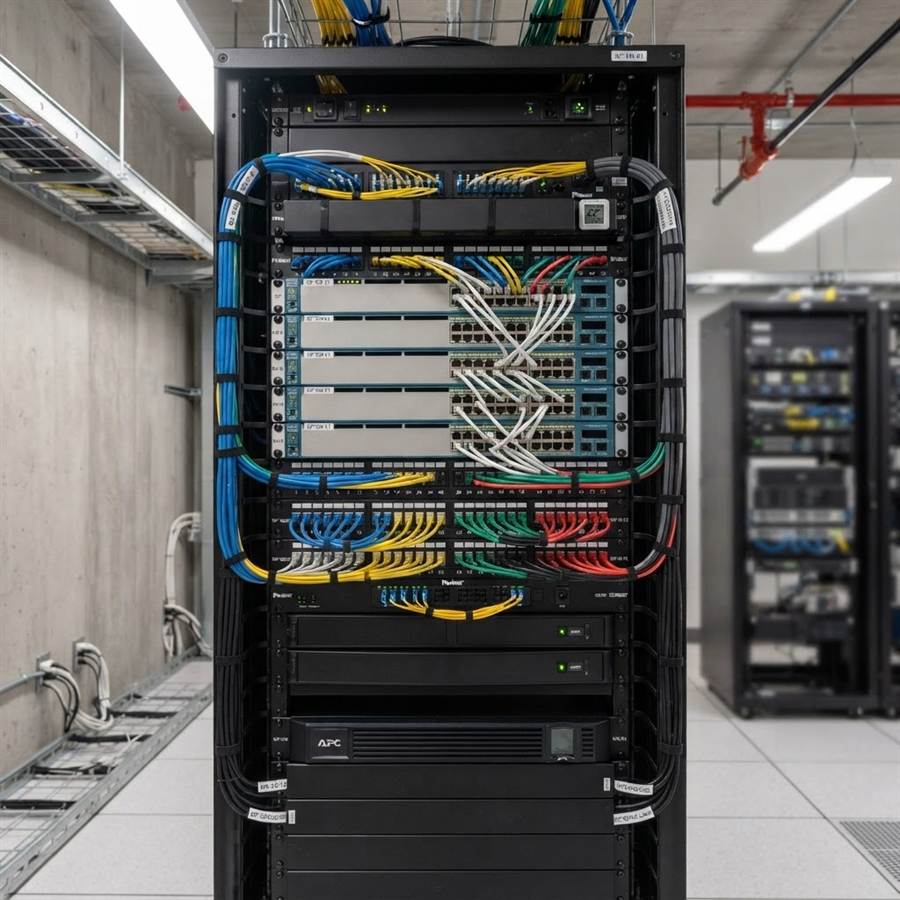
Before Bebashi's employees arrived, every network connection was tested and labeled. Workstations had connections. Phones had connections. Wi-Fi access points were connected. Copiers and time clocks had dedicated network access. And the two floors were connected through a high-speed fiber backbone.
That meant Bebashi wasn't moving into a construction project. They were moving into a working office.
A 10G fiber backbone ties the building together and allows both network closets to function as part of one centrally managed environment.
Tested and labeled drops make future troubleshooting, moves, and equipment changes significantly easier.
Wireless infrastructure was planned during construction instead of being added later wherever a cable happened to be available.
Rack space, network switching, and cabling capacity were designed with future employees and equipment in mind.
Instead of coordinating separate companies for cabling, fiber, Wi-Fi, and network equipment, Bebashi had one technology partner responsible for making the pieces work together.
WNS can help plan the technology side of your office build-out before construction is complete. We'll help determine:
Then we can install, configure, test, and support the environment after you move in.
One company. From the cable behind the wall to the network your employees use every day.